New Collection from Buddhist Poet

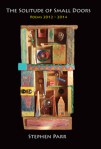
Review SolitudeFrontCoverThe Solitude of Small Doors, Ananda (Stephen Parr)
Wolf at the Door, Bristol 2015, £11.52, pb, 250 pp

(To order go to Lulu.com and search for Stephen Parr

Reviewed by Ratnagarbha

Ananda’s major new collection, The Solitude of Small Doors has a distilled reflectiveness about it. We get the feeling that this is the fruit of a lifetime of reflection, observation and wrangling with the intractibles of this precious, confusing all to brief event we call human life. But human life, in Ananda’s universe, is always reflected and refracted through things, things vividly alive that speak to the poet, each in its own idiosyncratic voice. The kind of things you find in dank back yards:

ropes that parted like rotting

asparagus at the lightest touch.

(‘Sudden Pianos’)Continue reading “New Collection from Buddhist Poet”

A quest for contours in East Anglia

A Deacon Hill
Deacon Hill, at the east end of the Chilterns

It was spring and I wanted to climb a hill, but not too far away. Too much driving, surely, equals alienation. Best to stay within a day’s journey on horse or camel back. Let the crabbed soul come along for the ride. No more than one hour’s drive then. I would give in to contour lust, follow Ruskin, worshipper of the Alps, in my own humble quest for ascent. Continue reading “A quest for contours in East Anglia”

Petrarch, Sonnets in translation

th

Francesco Petrarca (July 20, 1304 – July 19, 1374), commonly written in English as Petrarch, was one of the earliest humanists. Petrarch’s rediscovery of Cicero‘s letters is often credited with initiating the 14th-century Renaissance. His love sonnets were admired and imitated throughout Europe during the Renaissance and became a model for lyrical poetry. They were all written to express his love for a mysterious highborn lady called Laura, who certainly never returned his affection and may not even have existed. Nevertheless his anguished sonnets to her set the standard for lyrical love poetry up until the present day. Not so well known and celebrated as Dante in the English-speaking lands, his story is fascinating and his emotions are as fresh now as they were hundreds of years ago. Here is my attempt to translate his first sonnet to Laura, in its original rhyming scheme.

Sonnet I

All you who’ve heard in wandering scraps of rhyme
The sighs on which I fed my foolish heart
When in youth’s confusion I felt the dart
Of love – I was not then what I’ve become –
Who mark the reasoned sorrows that are found
Throughout my songs, of hope and fear bred,
I pray, if ever for love your heart has bled,
Then may your pity be with pardon crowned.
But now too well I see how my good name
Has been embroiled in long lived public scorn.
Myself I must convict of foolish schemes,
And the fruit of all my foolishness is shame
With deep repentance of the knowledge born
That life’s sweet joys are merely fleeting dreams.


Edward Thomas – master of prose

th

Edward Thomas has been much celebrated in recent years for the short lived but vital output of his poetry before he headed for the Western front and into memory. The influence of his prose writing – nature writing and literary reviews has been downplayed. This is regrettable. Continue reading “Edward Thomas – master of prose”

PROTASIS: The Cosmic Goddess

image

An extract from the editorial for issue 32, due out November 2015, on the cosmic goddess

I believe that the modern goddess image is not primarily a figure to be worshipped, but a symbol that embodies a vision of the entire cosmos that is deeply, desperately needed in this age. In turning our hearts to the goddess, we are turning towards a sacred cosmos, in which each object and event is intimately connected to an interwoven Whole. This interwovenness, or interconnectedness, or ‘interbeing’ as Zen Master Tich Nat Hanh styles it, is a vision of life that in past ages was felt and known ‘in the blood’ without needing to be articulated. Continue reading “PROTASIS: The Cosmic Goddess”

Urthona now has a Facebook page

Orc

You can now follow Urthona on Facebook. This page, which is the editor’s personal page, will contain short topical reflections about art, life and everything, as well as news of the magazine.

Please note:  the views expressed will be the editor’s personal views and not necessarily those of the magazine or its editorial team.

Click on the link at top right of our home page. Enjoy, and follow us if you wish to….

The imaginative stimulus of ignorance….

What does it mean?
What does it mean

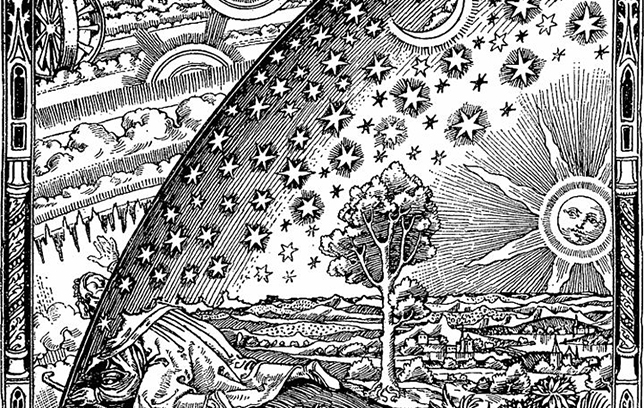
I have this alchemical symbol on my wall so I can see it when I meditate. I must admit this is more inspiring to me than most Buddha images would be. I have no idea what it means but that is part of the attraction. I am reminded of that old romantic idea that landscapes are more meaningful when half hidden by mist, something about giving space for the imagination to play in the gap of the unknown.

Of course poetry is often like this. When reading Geoffrey Hill, for example, rarely do I fully apprehend a definite meaning, but each of his lines is wonderfully evocative and pregnant with possible meanings….

“To mourn is to mourn; the ancient words suffice, / Latin or English, worn channels for the rain / charged and electric….”

This poem, from Without Title, is called – ‘To John Constable: In Absentia’, but who knows what relationship it has with Constable’s life…. and who care – wonderful, weighted words about grief and the need for rituals of mourning…. the doctrines of, presumably, the Latin Mass, or the Anglican Book of Common Prayer are not the point, it is the way the sound of the words falls charged into the soul….

The Dorset Rambler

Exploring the countryside and lanes of Dorset

Reconstructionary Tales

Modern literature; occasional straying into other paths.

Wood Bee Poet

Poems, thoughts...etc.

Shiny New Books

What to Read Next and Why

adcochrane

Curiosities, exploration, strange things and history

The Smell of Water

Dark and True and Tender is the North

Julian Beach :: Writing

Poems | England | Staffordshire | East Anglia | Northern Ireland | The Needwood Poems.

kindledspirit.com.au

art & poetry for spiritual evolution

heritagelandscapecreativity

Exploring Time Travel of Place

dianajhale

Recent work and work in progress and anything else that interests me

Richly Evocative

Places, books & other diversions

Writing the World

Nature writing for the ecological crisis

The Solitary Walker

art & poetry for spiritual evolution

Psychogeographic Review

The Art of Psychogeography

Particulations

art & poetry for spiritual evolution

dianajhale

Recent work and work in progress and anything else that interests me

Brian David Stevens

art & poetry for spiritual evolution

Murdo Eason - From Hill to Sea

walking / writing / between world and word

Ambrose Gilson – photography & writing

Photos and essays of geo-poetry, nature and landscape

Matthew Kunce Photography

A journey into photography and life.