Featured

URTHONA Buddhist arts magazine

CLICK THIS BANNER for SAMPLE PAGES
 Explore art & culture from a Buddhist perspective

Welcome to Urthona magazine. Inspired by William Blake’s zoa of the creative imagination, Urthona blends a Romantic concern with inner and outer spiritual freedom with the insights of the Buddhist East. Urthona appears once a year in 72 page full colour A4. We explore world art, literature, culture and imagination from a contemporary Buddhist perspective.

Click ESSAYS & ART FEATURES above for online essays on literature, art…

All 36 printed back issues at URTHONA SHOP see top menu.

For Editor’s Blog – musings on art, philosophy and psychogeography scroll down…


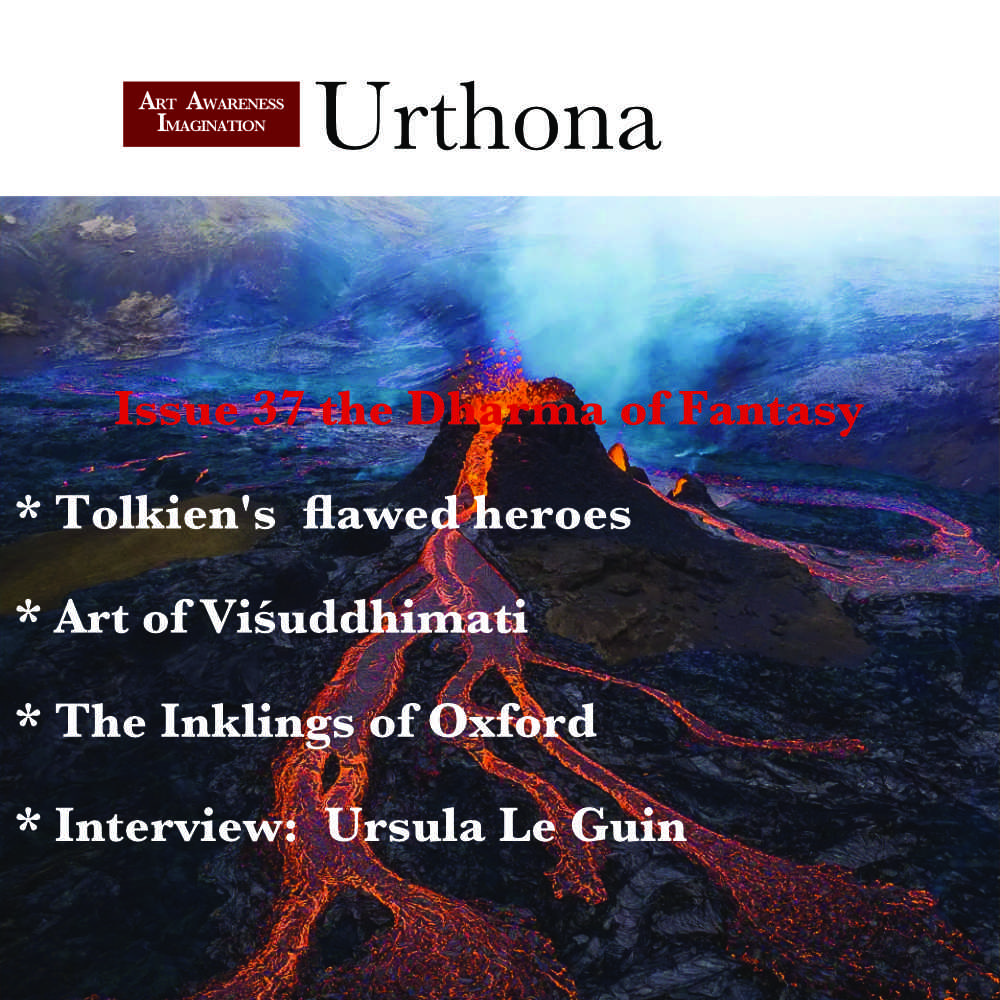
Current Issue 37, the Dharma of Fantasy

Tolkien’s alternative ending

The Lord of the Rings – alternative ending

The existing ending of Tolkien’s masterpiece is neither sad nor happy. Elegiac is perhaps the best description. Frodo, Gandalf and Galadriel depart over the Western seas towards Valinor, the blessed realm of the gods. Sam Gamgee, however, returns to the Shire to begin along and happy life – ‘well, I’m back he says, and that is the end. Simple and satisfying.

Ending a fantasy masterwork is extremely difficult, as many authors, including George R R Martin with his Game of Thrones series still unfinished, have found to their cost. Tolkien had it all clear in his mind. Life ends in the eternal, but temporal life, in Middle Earth, goes on. Sam and his family represent fruitful continuity.

The unpublished epilogue fills this scenario out and is a little more optimistic than the published ending about the fading of magic from Middle Earth. Sam talks to his beloved daughter Elanor and explains what has happened to some of the main characters in The book. But most touchingly he also tells her that King Aragorn is coming to visit, to Lake Evendim just north of the Shire. Sam, Elanor and his whole family are invited to join the king by an ornate invitation in Elvish script – which Tolkien of course drew up in great detail. Queen Arwen and a company of elves will also be there and there will be singing by the lake. Sam explains to Elanor (Tolkien’s spelling) that some high elves have remained to look after Rivendell and the forest of Lothlorien. Indeed it is hinted that they may be around for some hundreds of years to come. As Sam says, ‘the light is fading Eleanorel but it won’t go out yet…’

The next issue of Urthona will contain much more about Tolkien’s vision his down to earth heroes and the anti-quest of the Ring. Subscribe at shop above.

You can find the text of the unpublished epilogue in the book ‘Sauron Defeated’ and the more accessible ‘The End of the Third Age’.

You can find facsimiles off the manuscripts in the book Tolkien, the Art of the Manuscript. ‘

Currently, searching for ‘Lord of the rings unpublished epilogue’ with bring up a PDF of the text.

Image – a publicity still from the Prime series…

Issue 37 ‘Dharma of Fantasy’ out soon

The Dharma of Fantasy

Our issue on fantasy literature, issue 37, is almost ready to be printed!

There will be amazing articles on :

* Addiction and renunciation in The Lord of the Rings by Dayajava

* The Oxford Inklings and the quest for mythic renewal by Ratnagarbha

* Finding love, patience & forgiveness through fantasy, by Maitriyogini

* Wonderful mythic artwork from Vishuddimati and Moksananda

With fantastic artwork , including this rendition of ‘the eye of Sauron’ by Stirzocular –www.deviantart.com/stirzocular/gallery

Subscribe at Urthona Shop in top menu

Naming the wind

With great power comes great responsibility

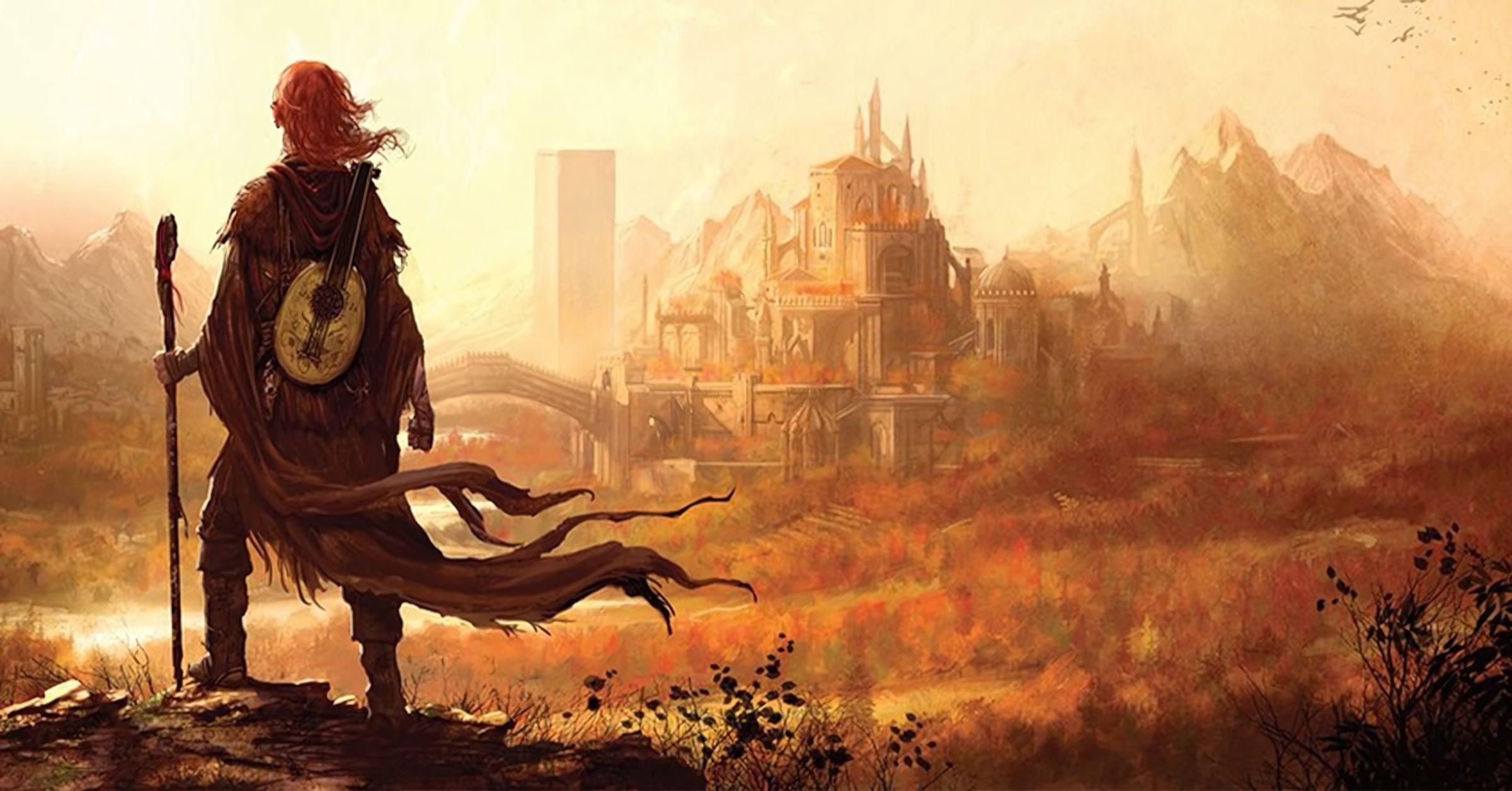
Some of the greatest modern fantasy novel series are unfinished. The Game of Thrones series by George Martin has five novels published, the final two have been awaited eagerly since 2011. Similarly for Patrick Rothfuss’ unfinished Kingkiller trilogy.

Here at Urthona we cannot speed up these authors but we can ask why they have been so successful, making fantasy novels by far the best selling literary genre. And more importantly, we can ask what such writing has to offer the world. Is it just escapism? Or does it offer a doorway into wider vistas of myth, meaning and engagement with the human condition not easily available elsewhere?

Urthona Issue 37, due out later this summer, is about fantasy writing that engages the fundamental issues – of birth, death, power, pleasure, friendship, love and the need for wisdom in a fractured world, that all human beings must face one way or another.

Mythopoetic novels might be a better name for the genre at its best. It is writing that engages with who we really are, rather than offering comforting regression to a past that never existed.

Realism (whatever that is) can show us these issues embodied in the lives we think we actually live in the modern world. Fantasy writing can highlight the perennial themes of human life stripped of incidentals, in all of their raw, luminous power…

In Urthona Issue 37 well as articles covering the Inklings – C. S Lewis, J.R.R. Tolkien and Charles Williams – Buddhist writer Caroline Ivimey-Parr will be taking a broader look at modern fantasy and how it has helped her on her spiritual path (she has just been ordained into the Triratna Buddhist order):

“Fantasy novels were the outlet for an imagination and ambition that had little interest in worldly prosperity or status. I couldn’t articulate even to myself what I wanted, but I knew it was something of a different order to mundane life (‘This can’t be it. This can’t be all there is to life’). I wanted a purpose worth giving my whole being to; a family, mortgage, and 9-5 wouldn’t cut it. I was following an inkling of a meaning for life, a meaning that was cloaked in mystery and soaked in magic..”

Caroline doesn’t mind that the Kingkiller Trilogy is unfinished:

“It seems fitting that my favourite fantasy series is exquisite, yet incomplete – like the Dharma life, beautiful and poignant, constantly moving towards an incomprehensible end.”

Kvothe, the flawed hero of the Kingkiller Chronicles, stuck in a literary bardo though he is, learns how to control the wind by the power of naming. With great power, naturally, comes great responsibility. Something that Kvothe does not always live up to. Just so Ged, in Ursual Le Guin’s Earth-Sea novels, misuses the power of naming to call up a shadow from the world of the dead that haunts him for the rest of the series. As Caroline says:

“In The Kingkiller Chronicles real magic is incomprehensible to the ordinary mind. Even when Kvothe stumbles across the true name of the wind, it is not a word he can simply recall. The knowledge is hidden within his mind; he does not control this power… Really seeing the world (either through the lens of magic, or removing the lenses/veils through Dharma practice) is such a different perspective to the everyday mind; it is essential to act with responsibility and with great care.”

Find out more in Urthona 37, subscribe by going to Urthona Shop in top menu.

Your editor VS AI

Ratnagarbha verses AI!

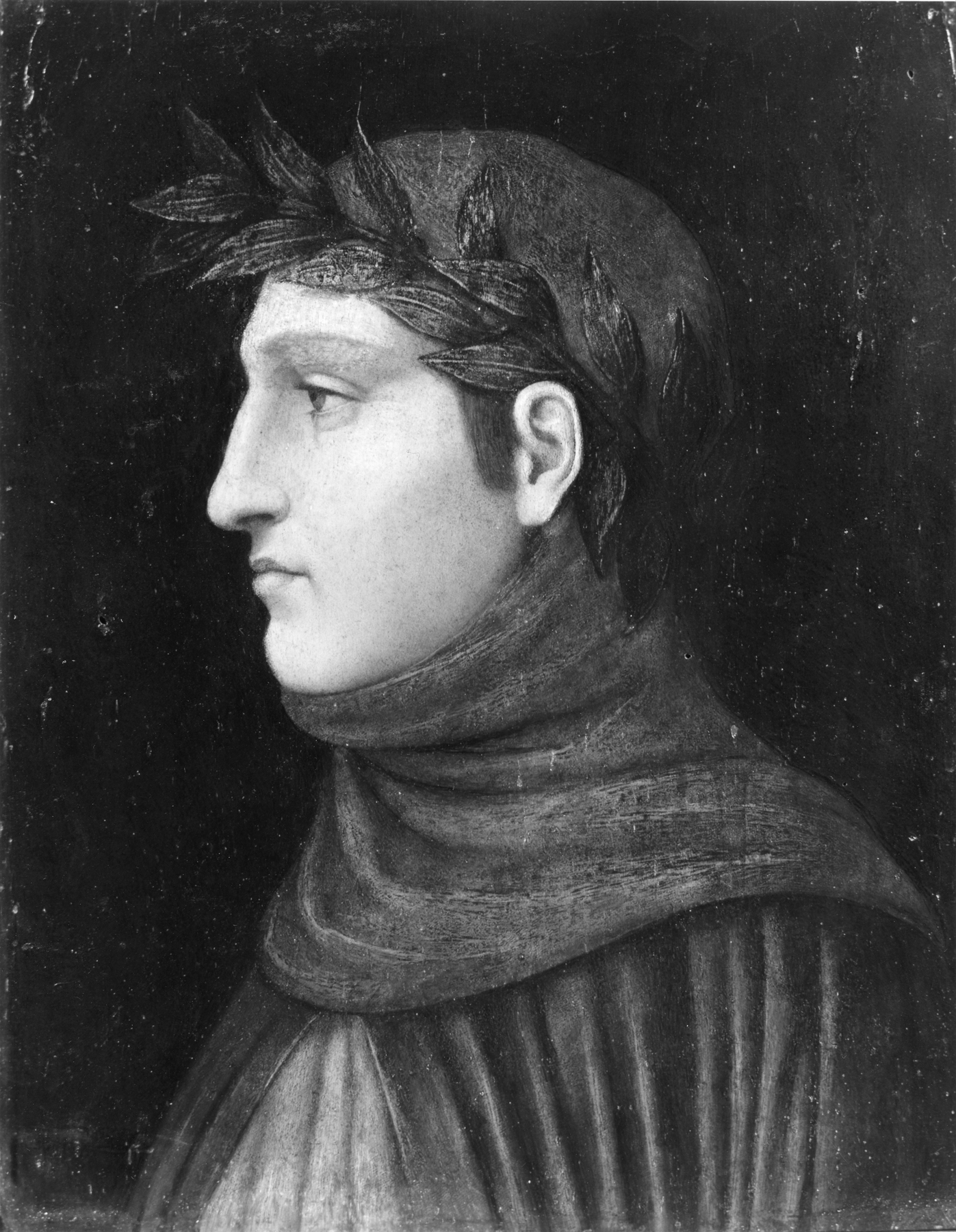
So I am working to some translations of Petrarch sonnets. I did some in blank verse but I aspire to do 14 of them in rhyme. Here is my attempt at the first in his famous sequence to the mysterious Laura. For fun I asked google’s Gemini to have a go. It preserved the rhyme scheme, added an extraneous stanza which I have omitted, but failed to preserve the meaning of the very complex second stanza. And somewhat garbled the rest, but at least it does rhyme. A McGonagall version. Win to the human race!! But isn’t it amazing that it managed to have a go…

*********

Sonnet to Laura, 1, Ratnagarbha translation:

All you who’ve heard from wandering scraps of rhyme

those sighs on which I fed my foolish heart,

when in my youth I felt love’s brutal dart –

I was not then the person I’ve become.

All you who mark the reasoned sorrows found

throughout my songs, of hope and fear born.

If you yourselves have felt love’s bitter thorn,

then may your pity be with pardon crowned.

But now, alas, I see how my good name

is hopelessly embroiled in public scorn.

Myself I must convict of foolish schemes,

for the fruit of all my vanity is shame,

and deep repentance, of the knowledge born

that life’s sweet joys are merely fleeting dreams.

***********

Sonnet to Laura, 1, Gemini AI translation:

Ye who in scattered verses hear the strain

Of sighs that fed my heart in youthful days,

When in my early years, I, yet unchained,

Was but a fledgling, far from what I’ve grown to be, this way,

Mark now the change, the years that swiftly glide,

The hopes once bright, now dimmed by time’s cold hand,

The love that burned, now cooled by age’s tide,

The dreams that soared, now buried in the sand.

But well I see, a spectacle to all,

A long-held tale, a source of frequent shame,

Wherefore I blush, within my heart’s own hall,

And from my folly’s fruit, regret’s sharp flame,

And bitter knowledge, clear as day’s bright gleam,

That all the world’s delights are but a fleeting dream.

Coleridge & the Landscape of Vision

Cheddar Gorge, Somerset, England, UK

Coleridge and the landscape of vision

A psycho-geographical essay by Ratnagarbha 

The Quantocks in Somerset saw one of the greatest years of creativity in the history of English poetry when the Wordsworths lived at Alfoxton Park (which is now a Buddhist retreat centre that runs retreats on mindfulness, communication and creativity) and Coleridge was living close by in the village of Nether Stowey.

Continue reading “Coleridge & the Landscape of Vision”

Dhammapada – choral

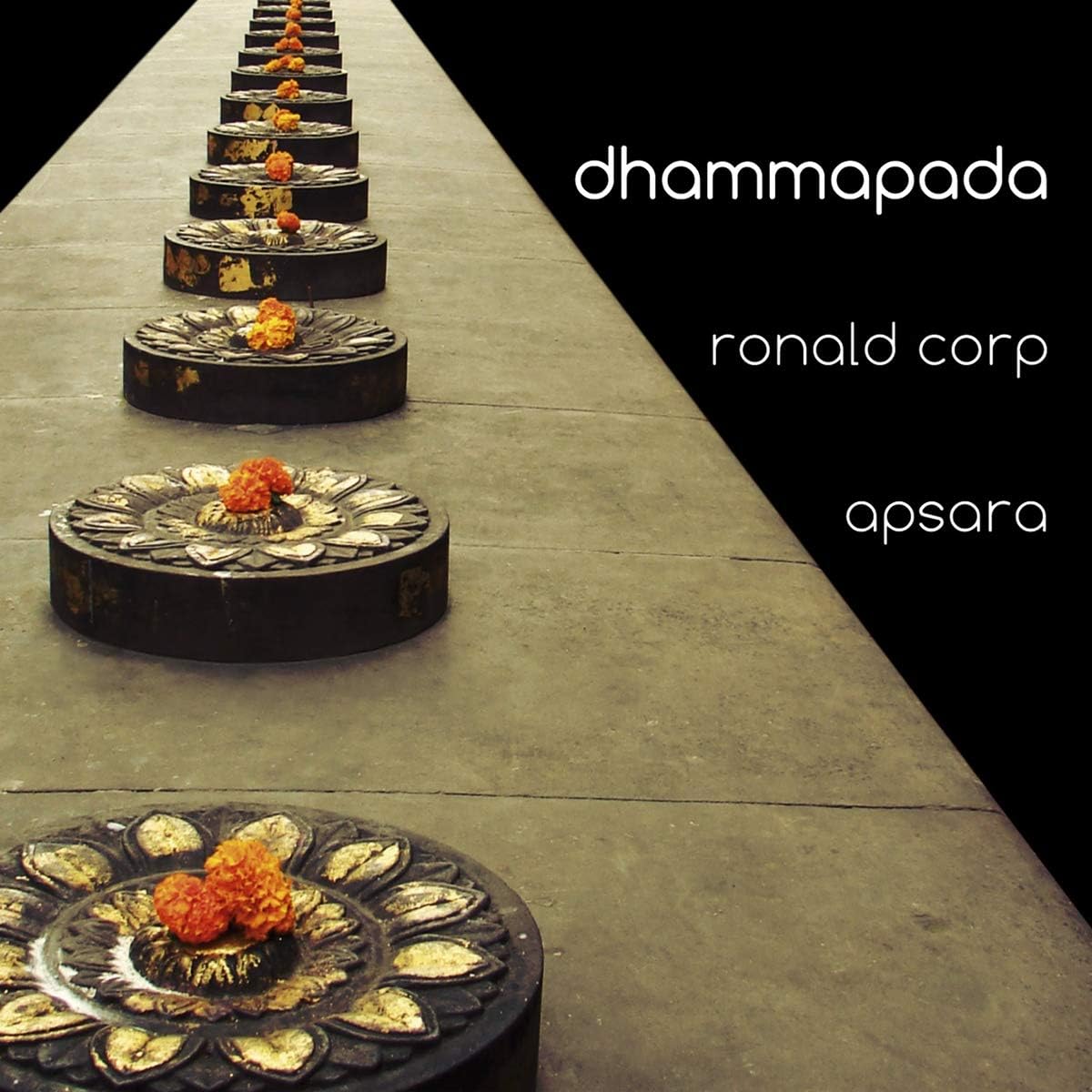
Ronald Corp has written a magical sacred choral setting of the Dhammapada

The Dhammapada is one of the most sacred texts of Buddhism, it contains pithy sayings of Gautama the Buddha. Composer Ronald Corp has written a wonderful sacred choral setting of some verses from the Dhammapada. Not himself a Buddhist Corp was clearly deeply inspired by these ancient verses and has written a piece very much in the tradition of British sacred choral music. I was reminded somewhat of the work of the celebrated Scottish Catholic composer James MacMillan. I was inspired and uplifted by these contemplative settings of a key Buddhist text.

The forgotten Inkling & the Buddha

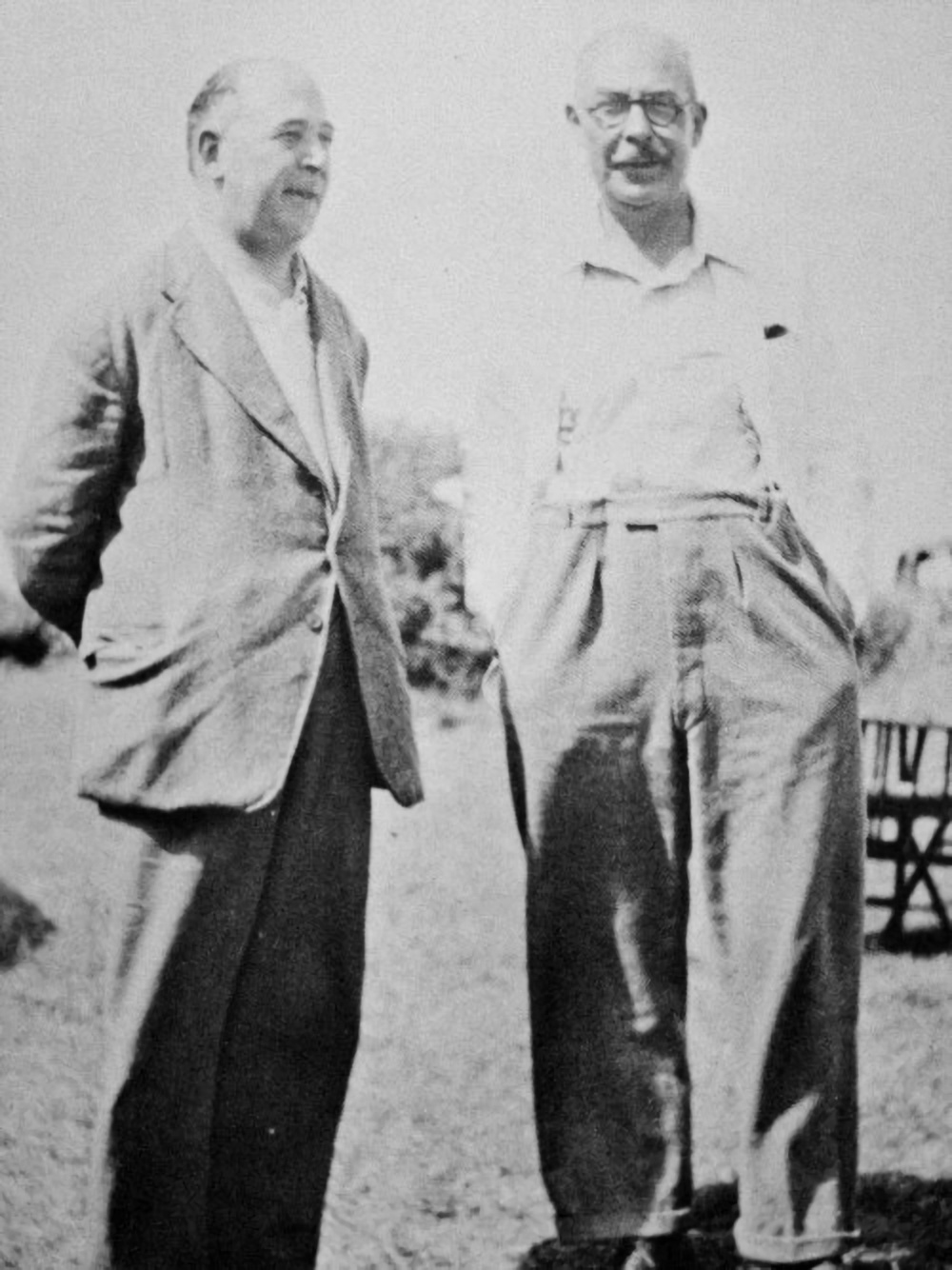
C. S. Lewis (left) with brother Warnie, date unknown, presumably taken during Major Lewis’s retirement

The Inklings, that informal but highly influential Oxford literary group, has had many books written about it. These days it is fairly well known that as well as J. R. R. Tolkien & C. S. Lewis it contained such luminous figures as linguistic philosopher Owen Barfield and the poet and arthurian visionary Charles Williams. Easily forgotten however is C. S. Lewis’s brother major W. H. (Warnie) Lewis. He was a talented writer, on French cultural history, though not by any means a genius. More importantly he attended the Inklings for many years and kept a beautifully written diary.

Continue reading “The forgotten Inkling & the Buddha”

The Alchemical Island

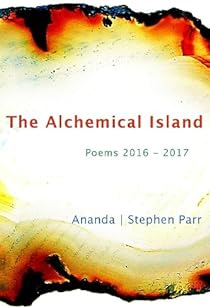
A new book of strange and marvellous poems from Ananda / Stephen Parr

The Alchemical Island: Poems 2106 – 2017 pb, 250 pp, £12 – to order email the poet on moon@wolfatthedoor.org

Ananda (Stephen Parr) has brought out another poetry collection, his first since the 2015 collection The Paths Between. The Alchemical Island says on the cover that it covers the years 2016 and 2017. Given the great variety and high quality of the work in this volume one can  only wonder and anticipate what richess the poet has up his sleaves from subsequent years. Years, by the way, during which he moved from Bristol back up to his beloved North (Sheffield in fact) so it will be interesting to see what that move has brought to his work.

Continue reading “The Alchemical Island”

Tolkien and Buddhism

TOLKIEN AND BUDDHISM

Has this topic been explored yet by anyone? Urthona will be doing so in our next issue (summer 2024).

Meanwhile here is an article that opens up many interesting parallels with Tolkien and western estotericism. Many Buddhists I imagine would focus more on Tolkien’s moral vision, but there is much to think about in this rich essay written by a traditionalist writer in the lineage of Rene Guernon.

Essay: Tolkien and the Primordial tradition

Joscelyn Godwin does mention Buddhism however…

Continue reading “Tolkien and Buddhism”
The Dorset Rambler

Exploring the countryside and lanes of Dorset

Reconstructionary Tales

Modern literature; occasional straying into other paths.

Wood Bee Poet

Poems, thoughts...etc.

Shiny New Books

What to Read Next and Why

adcochrane

Curiosities, exploration, strange things and history

The Smell of Water

Dark and True and Tender is the North

Julian Beach :: Writing

Poems | England | Staffordshire | East Anglia | Northern Ireland | The Needwood Poems.

kindledspirit.com.au

art & poetry for spiritual evolution

heritagelandscapecreativity

Exploring Time Travel of Place

dianajhale

Recent work and work in progress and anything else that interests me

Richly Evocative

Places, books & other diversions

Writing the World

Nature writing for the ecological crisis

The Solitary Walker

art & poetry for spiritual evolution

Psychogeographic Review

The Art of Psychogeography

Particulations

art & poetry for spiritual evolution

dianajhale

Recent work and work in progress and anything else that interests me

Brian David Stevens

art & poetry for spiritual evolution

Murdo Eason - From Hill to Sea

walking / writing / between world and word

Ambrose Gilson – photography & writing

Photos and essays of geo-poetry, nature and landscape

Matthew Kunce Photography

A journey into photography and life.